Data → Data Engineering
ELT
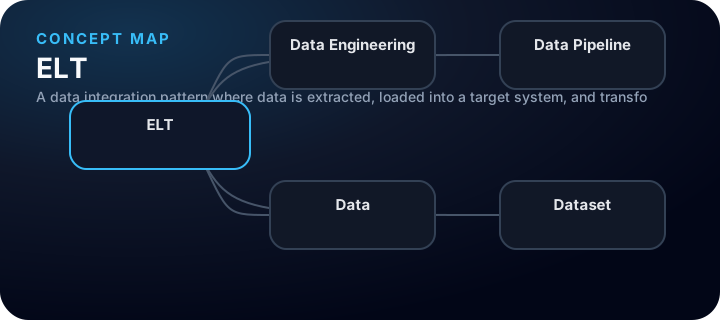
A data integration pattern where data is extracted, loaded into a target system, and transformed there.
Motivation
ELT solves the problem of moving raw data into an analytics system quickly and transforming it where scalable compute is available. It is often compared with ETL, which transforms data before loading it.
Mental model
In ELT, data is copied first and cleaned later. This is common when the destination warehouse or lakehouse is powerful enough to run transformations efficiently.
Where it fits
ELT belongs to the Product track, inside Data Applications. It is closely related to data pipelines, datasets, analytics systems, and operational reporting.
Subconcepts
Extract
Extract is the step that reads data from source systems such as databases, files, APIs, or event streams.
Load
Load is the step that writes the extracted data into a destination such as a warehouse, lake, or analytics database.
Transform
Transform is the step that cleans, joins, reshapes, and aggregates data for analysis or use by downstream systems.
Common mistakes
- Treating ELT and ETL as identical.
- Forgetting that raw loaded data still needs governance and quality checks.
- Building transformations that no one can trace back to source data.
Related concepts
Use the metadata panel or return to the graph to explore Data Pipeline and Dataset.