Software → Computer Architecture
Memory Hierarchy
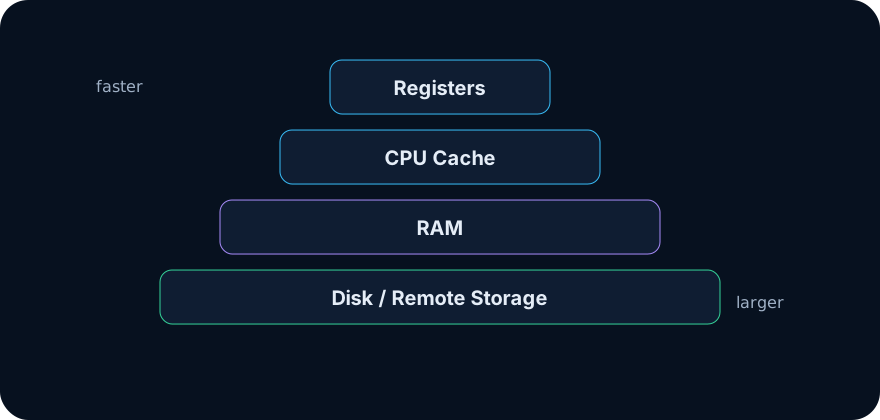
The layered organization of storage from fast small memory to slower larger memory.
Motivation
The memory hierarchy solves the problem that fast memory is expensive and small, while large memory is slower. Computers combine several storage levels to balance speed, size, and cost.
Where it fits
Memory hierarchy connects hardware, computer architecture, operating systems, and performance engineering.
Mental model
Data moves through layers: registers, CPU cache, RAM, disk, and remote storage. The closer data is to the CPU, the faster and smaller that layer usually is.
Common mistakes
- Treating all memory access as equally expensive.
- Ignoring cache locality when reasoning about performance.
- Confusing software caches with CPU caches.
Related concepts
CPU cache, RAM, disk I/O, storage device, latency.